
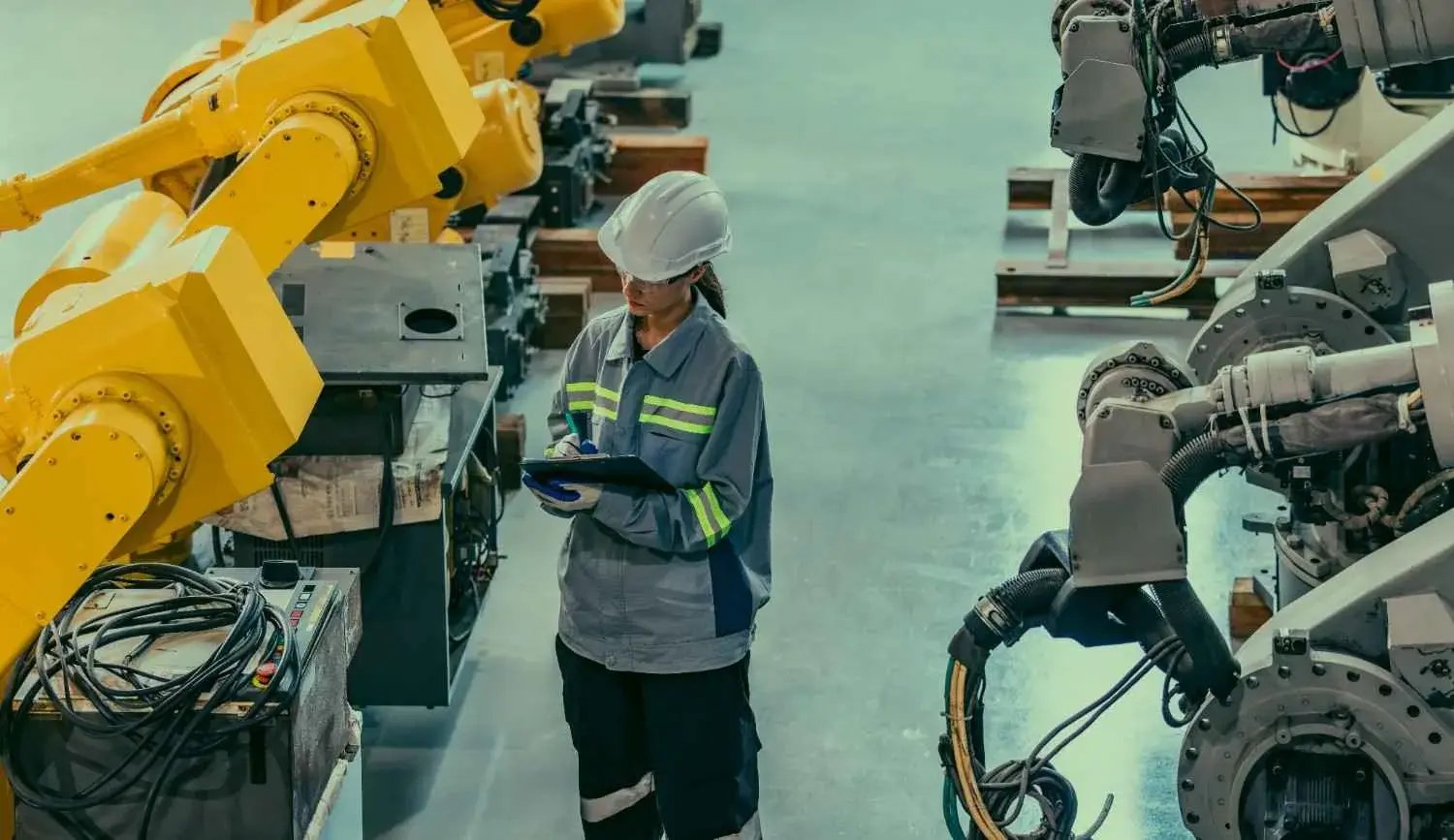


Generative AI in the manufacturing industry: conversations are more likely to go straight to chatbots. This is an unfortunate thing, as the most intriguing use cases aren't as crowded. They're appearing in things like handoff notes for shifts as well as troubleshooting manuals, and not just chatbots that interact with customers.
It's worth separating two issues in the beginning. Most of the software NTWIST develops, such as tools like nScheduler and optimize, uses prescriptive and predictive AI in manufacturing. Recognizing this helps the audience feel assured about understanding AI's role and managing its integration effectively.
Where Generative AI Is Actually Showing Up
The most obvious early use case for Generative AI in Manufacturing Industry settings is the capture of knowledge. The plants lose a lot of institutional knowledge each time an experienced operator leaves, and most of this knowledge was not recorded in any official way. The tools that generate knowledge are beginning to take over shift handoffs and troubleshoot manuals, as well as capturing the skills that would have gone out with the person who was the most knowledgeable about the machine.
Some others use cases to watch, and all fall under the umbrella of AI-powered manufacturing.
- Documentation for maintenance drafts: Instead of the technician writing an entire repair from scratch, a generative system will create an initial draft from sensor logs and previous records and allow the technician to read and make corrections rather than starting with a blank.
- Summary of the reports of a shift: turning scattered notes from several shifts into one readable summary for the supervisor who will be next instead of reading three different reports.
- Artificial training information creates additional examples with labels for vision-based quality inspection. It is helpful for defects that don't occur frequently enough to train a model adequately.
- Answering questions at floor level: a generative layer that is layered on top of the existing plant documentation so that the operator can inquire about why a line typically stops at the time of changeover instead of rummaging through the contents of a book.
Each one of these applications involves AI generative models that assist with documentation or knowledge sharing, but they do not make actual production decisions. Clarifying this helps prevent misconceptions about AI replacing human judgment and emphasizes the importance of prescriptive AI for operational decisions.
Why This Isn't a Replacement for Prescriptive AI
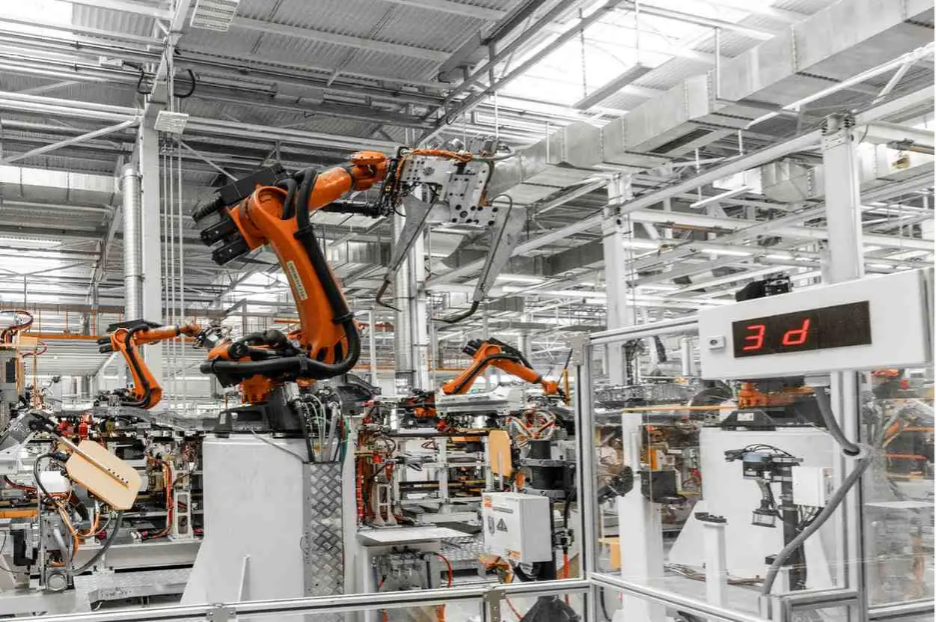
It's tempting to think of these instruments as the next leap over optimization and scheduling, but it's not the way it plays out on the floor. The generative model may aid supervisors in writing the details of what transpired during a shift. It's not able to tell you by itself how to alter a production plan when equipment fails. This is a prescriptive issue, which is why tools such as nScheduler must be distinct layers within any AI-powered manufacturing stack.
The companies that are gaining real benefit are those who treat generative AI as a communication and documentation layer over existing systems such as MES, ERP, and SCADA. Discussing integration challenges and solutions can help readers understand how to effectively implement generative AI without disrupting current workflows.
What to Watch for Before Adopting It
Some honest warnings to be aware of. Generated outputs need someone to look over them prior to putting anything into a maintenance log or a report for customers. Any tool that touches sensitive operational data should be installed in the existing systems instead of requiring the creation of a separate backup of the data elsewhere. This rule is applicable to artificial intelligence in manufacturing generally, not just generative AI. Any reliable generative AI model to be used in production starts by reviewing access before even a single model interacts with the data of a plant.
Where Generative AI Fits Inside a Broader AI-Powered Manufacturing Stack
Consider it as a layer within a multitude of layers. Predictive maintenance alerts you to the problem prior to it happening. Prescriptive scheduling makes the decision on the best course of action. Generative AI in Manufacturing Industry deployments, when at their most effective, is over both, turning the events into something that one can comprehend in just 30 seconds, rather than searching through the raw logs. The three layers cannot replace each other, while a plant that seeks AI in the manufacturing industry with a single silver bullet typically ends dissatisfied.
Bottom Line
Generative AI in the Manufacturing Industry uses cases at the moment that are not as important as the headlines suggest. There are fewer technical gaps, more efficient transfer of knowledge between shifts, as well as less institutional knowledge dissolving with every retirement. In conjunction with prescriptive tools, such as NTWIST's, this is a significant and subtle change in how artificial intelligence is used in manufacturing. It is displayed on a typical shift, not only in an introductory presentation.
FAQ: Generative AI in Manufacturing Industry
Does generative AI work similarly to the AI employed to schedule production?
No. Generative AI creates content such as documentation or text. Scheduling tools such as NTWIST's nScheduler are prescriptive. They suggest or make operational choices according to real-time situations.
What is the most useful and generative AI application in manufacturing?
Knowledge Capture, which includes things like handoff notes for shifts and troubleshooting guides, usually offers the fastest and most tangible results.
Does generative AI require replacing existing plant systems?
There is no reason to do so, and it should not. It's best to layer it on top of MES, ERP, or SCADA systems that is already in operation.
Are you curious about where AI, either generative or otherwise, is actually a part of your production process? Ask for a free production plan evaluation from NTWIST. We'll assist you in determining what's worth investigating first.
About the Author
Pramodh Chandrashekar is an industry and technology expert and Senior Researcher at NTWIST. His expertise includes industrial AI, mining and manufacturing technology, digital transformation, and operational optimization.
He focuses on applying AI and data-driven technologies to improve operational efficiency and business performance.
LinkedIn: Pramodh Chandrashekar