
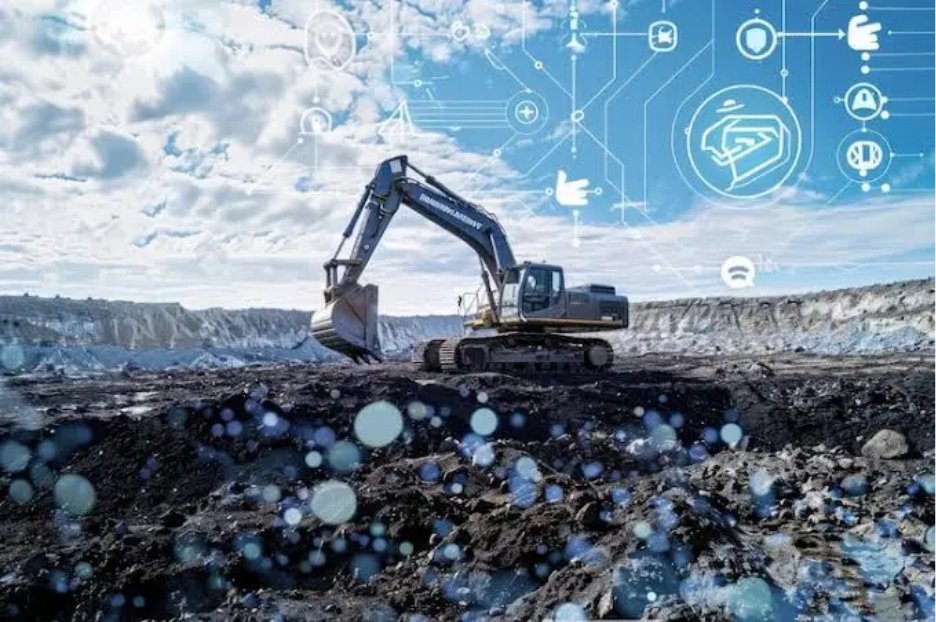


Every mine site NTWIST visits has more data than it knows what to do with. Dispatch reports every truck movement, the lab runs assays twice per shift, surveyors circle the stockpiles every week, and the plant historian tags several thousand variables every second. But when the mill superintendent asks what is actually on the ROM pad, the best answer anyone can give is an average based on what the mine produced last month.
That is why AI solutions for mining are moving out of executive briefing rooms and into budget spreadsheets. The useful ones enhance, rather than replace, systems a mine has already paid for, bringing inventory, fleet and plant data into one unified context with confidence indicators that IT will feel comfortable with.
Why Mining Needs Purpose-Built AI
Generic analytic platforms are challenged by the fundamental anisotropy of ore. Grade trends tend to be long and wispy, rock hardness varies from bench to bench, and metallurgical test work rarely interrogates more than 5% of an orebody, leaving the other 95% to educated guesses. Meanwhile, at many operations, more than 80% of production decisions still come down to experience and intuition.
Purpose-built AI for mining recognizes and works with this anisotropy, learning from a mine's block models, assay data and fleet records to build confidence estimates about what is actually going to be fed to the mill.
Inventory That Matches What Is There
Long-term stockpiles represent a potential source of mill feed, but the value locked in these materials is not always reflected in their audit trail. Dumps are formed by successive passes over the same ground, excavated in irregular slices and re-assayed at intervals, with each step introducing opportunities for error. The average grade on a spreadsheet can differ significantly from the average grade on the ground.
NTWIST's OreMax reconciles stockpile inventory to resource-grade block models using survey and dispatch data, typically reducing block-level grade variability by 30% to 50%. In one gold mining case, it uncovered about 0.1 million tonnes of medium-to-high-grade ore worth an estimated US$11 million. Automated stockpile reconciliation also saves 20 to 80 hours per week that would otherwise be spent on manual data work.
Security Built In
Interconnecting operational systems is a concern for any IT department, and for good reason. Any AI software for mining that is worthy of deployment must prove itself as secure and compliant as the historian it is built to connect with.
Every MineMax installation includes role-based access controls, single sign-on capabilities, data encryption both in transit and at rest, and full audit trail documentation. For those with particularly rigorous data residency requirements, there are options to host the solution on customer-controlled clouds or within the mining organization's own network. Finally, recommendations from the platform are always given in an advisory capacity, and no changes are actually made until the operations team has approved them.
Fleet Records as an Ore Tracking Engine

Most operations still treat their fleet management records as a mere productivity indicator. Yet every truck's trip represents a transfer of material from one part of the operation to another. Every trucking cycle thus provides data about where material came from, where it is going, and, by extension, what it is. This is why NTWIST can use existing dispatch records, block models and assay data to follow every tonne of material from the excavation face through the ROM pad and into the mill, without requiring any additional equipment or sensors.
At a gold mining operation producing about 100,000 ounces of gold per year, substituting average ROM data for block-specific predictions from DynaMax increased gold recovery by 1.6%, or roughly US$2 million per year, with no changes to downstream equipment.
What AI Mining Optimization Delivers
NTWIST's combined MineMax package has delivered more than $35 million in annualized value across its installations, with forecasts for production planning and ore movement decisions reaching 95% accuracy. Payback tends to occur within 45 days of a mine's first production use, and most installations achieve full operational clarity within 90 days. Once feed variability stops being averaged away, recovery typically improves by 0.5% to 5%, and reagent costs can drop by up to 30%.
For sites where stockpile inventory accuracy or fleet data visibility are concerns, NTWIST's MineMax suite is a good starting point. To discuss how it might be applied to a specific operation, Book a Clarity Call with the NTWIST team.
Frequently Asked Questions
What are AI solutions for mining?
These are data science platforms that use a mining operation's block models, fleet data, inventory records and plant data to forecast mill feed quality, track material and recommend operating decisions, often as an enhancement to existing systems.
Does AI-powered mining require sensors or new hardware?
Not necessarily, as many platforms, MineMax included, leverage existing block models, fleet management systems, stockpile surveys and assay data to build material forecasts that only improve with time.
How do AI solutions for mining handle data security?
Most such platforms offer role-specific access controls, single sign-on capabilities, encryption in transit and at rest, and full audit trail documentation. Some can be deployed in a manner that always keeps data inside a company's network.
About the Author
Pramodh Chandrashekar is an industry and technology expert and Senior Researcher at NTWIST. His expertise includes industrial AI, mining and manufacturing technology, digital transformation, and operational optimization.
He focuses on applying AI and data-driven technologies to improve operational efficiency and business performance.
LinkedIn: Pramodh Chandrashekar