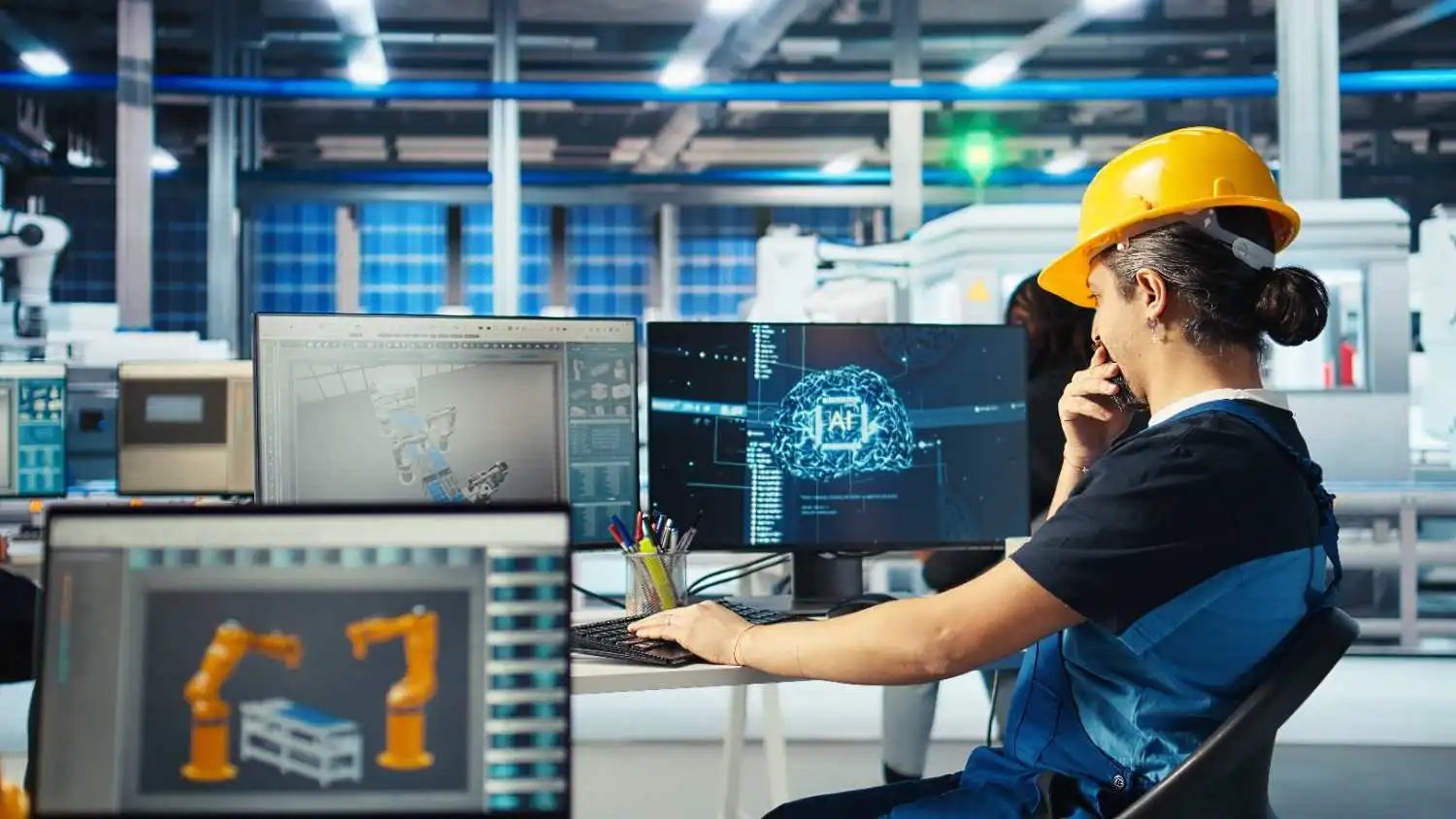
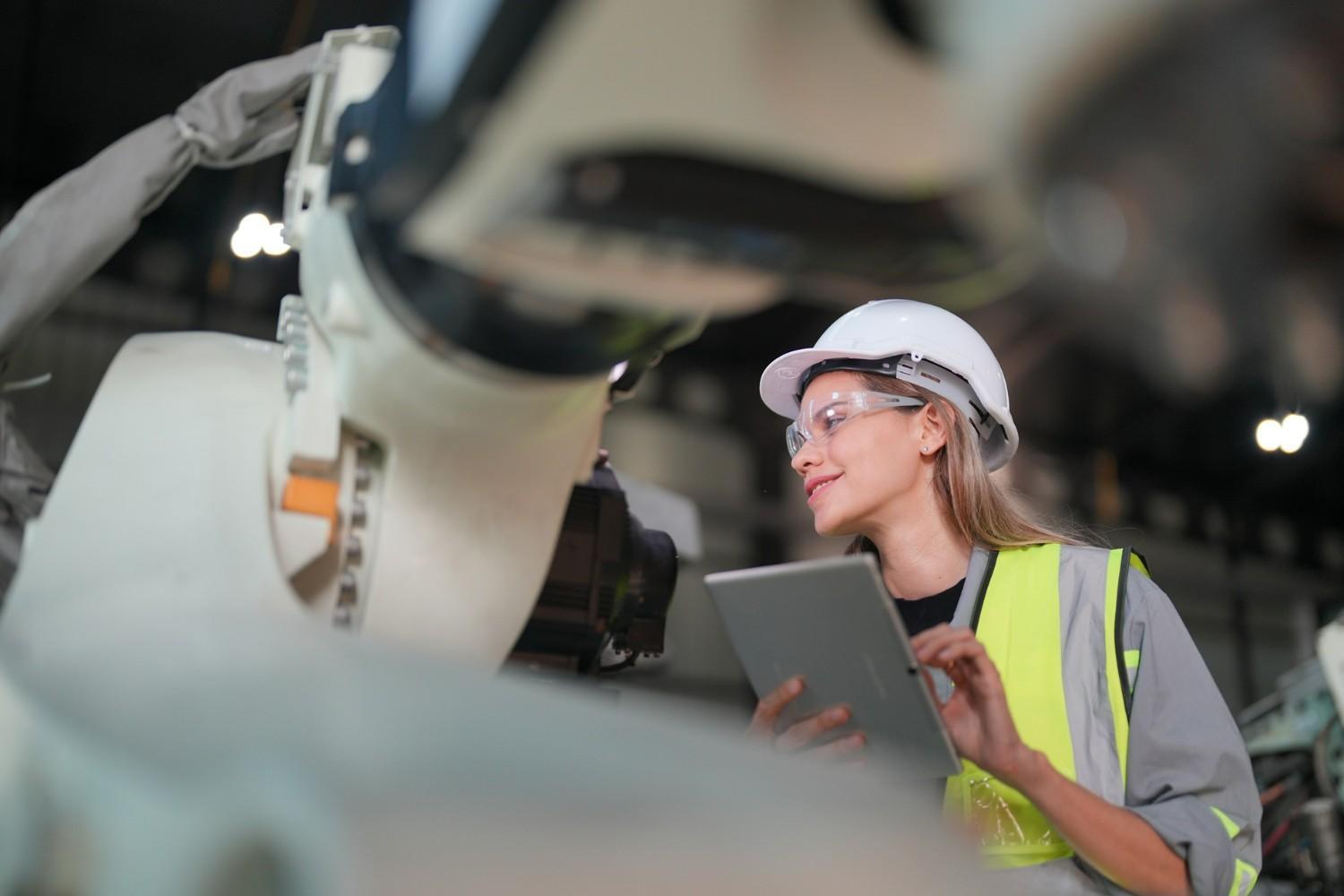
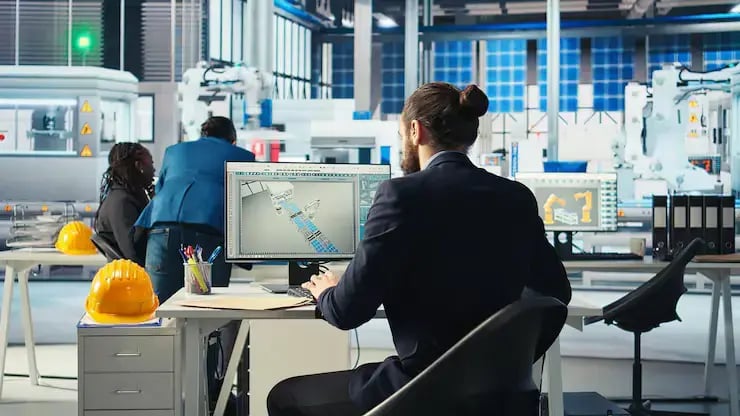

Stand on a factory floor for an hour and you'll still see whiteboards, grease-stained clipboards hanging on the same nail they've hung on for years. Nobody's ripped those out. But behind them, something quieter has taken over a lot of the actual decision-making, and that something is AI in manufacturing. It's not replacing the whiteboard so much as feeding it better numbers.
People still assume this is a "someday" technology. It isn't. It's already sitting inside scheduling software, quality cameras, and maintenance logs at plants that made something you own right now.
So What Is AI in Manufacturing, Exactly?
Cut through the marketing language and it's software that studies a plant's own data and makes a better call than a static spreadsheet would. Machine signals, production plans, quality readings, and energy draw—it watches all of it and catches patterns a stretched-thin operator either misses or notices too late.
Think of the one coworker who actually reads the logs instead of skimming them, who remembers what happened during last month's changeover and can tell you, without checking, that this batch is running hotter than the good one from March. That's roughly the job AI in manufacturing does, minus the coffee breaks.
Why Now, Though?
A few years back this was a pilot-program thing, something only deep-pocketed companies bothered testing. That window closed fast. Supply chains stopped behaving, skilled labor got scarce, and customers who once tolerated a late shipment now just switch suppliers. Plants needed a way to adjust on the fly, and that's the gap where AI in manufacturing found its footing.
Here's a real example instead of a hypothetical one. NTWIST, an industrial AI company out of Canada, works with manufacturers and mining operations across North America, and its pitch is unglamorous: don't rip out the MES or ERP you already paid for, layer intelligence on top of it. Its scheduling product, nScheduler, rewrites the production plan the moment a machine goes down, and clients running it have reported throughput gains of 5 to 30 percent, with on-time delivery pushing toward 95 percent. Its process tool, nOptimize, adjusts line speed and dosing off live signals, cutting process interruptions by 15 to 25 percent. Most deployments go live in 60 to 90 days, proof this doesn't need a two-year overhaul to show something change.
What You Actually Get Out of It
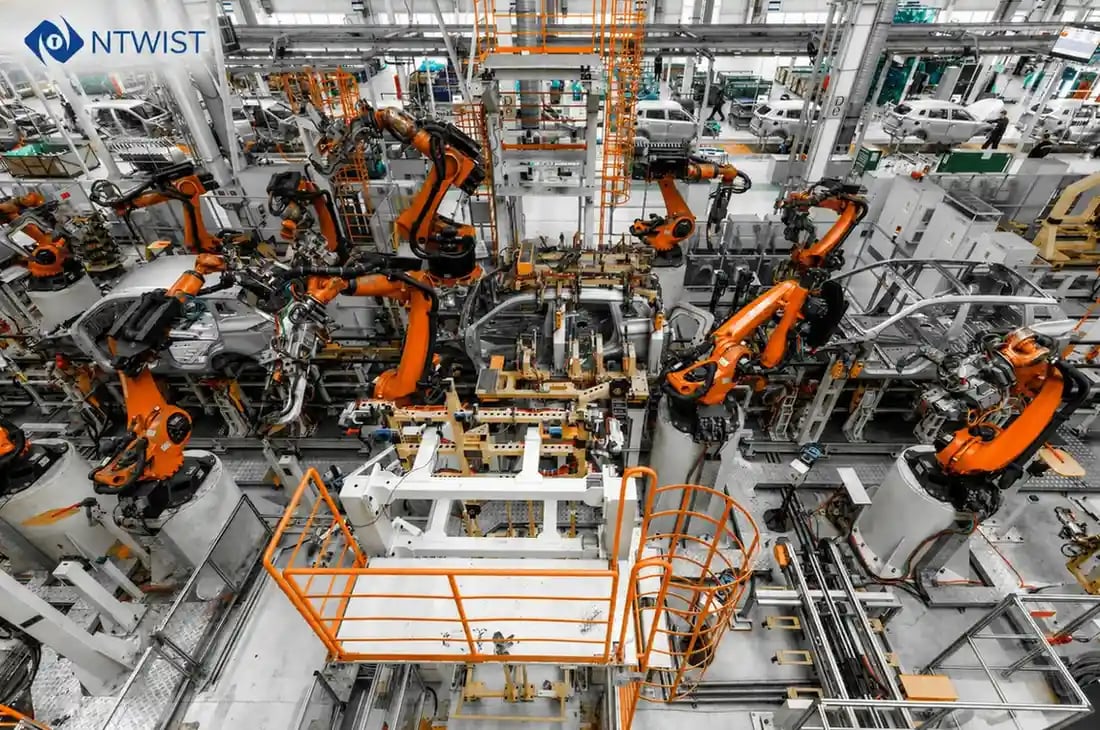 The benefits of AI in manufacturing rarely make headlines, but they show up on an ordinary Tuesday shift. Fewer breakdowns nobody saw coming, since predictive maintenance flags wear before a machine quits. Schedules that survive contact with reality instead of falling apart mid-shift. Quality that holds steadier, since vision systems catch defects before they reach a customer. And for anyone running more than one site, a current view of the floor instead of a report that's already stale.
Nobody's operator gets replaced here. They just stop finding out about problems the hard way.
Where It Shows Up on the Line
A handful of overlapping tools work the same problem from different angles: scheduling that reshuffles itself the moment a constraint shifts, maintenance models that predict failure from actual usage instead of a fixed calendar, setpoint recommendations that nudge dosing toward what's working now, downtime forecasting built off historical patterns, and warehouse logic that syncs restocking with what's actually moving on the line.
Where This Goes Next
The next wave looks less flashy than people expect. Plants want systems that work with whatever they've already got, an older SCADA setup or a shiny cloud MES, rather than another overhaul disguised as software. Soft sensors are becoming normal too, estimating values a plant can't measure without buying new hardware. This is where AI in manufacturing is actually headed—quieter integration rather than dramatic reinvention.
Thinking About Where to Start?
If any of this sounds like your plant, that's the exact problem NTWIST was built around. Its tools sit on top of the MES, ERP, and SCADA systems you already run, so there's no rip-and-replace project to pitch leadership on. Whether it's nScheduler for schedules that hold up, nOptimize for process stability, or Nexus iMES for tying the shop floor to real machine capacity, this is what AI in manufacturing looks like when done without disrupting a plant that's already running. Worth a look at ntwist to see where your own numbers might land.
Frequently Asked Questions
What are the main benefits of AI in manufacturing?
Fewer surprise breakdowns, schedules that bend instead of break, steadier quality, and less wasted energy.
Is it hard to add AI to a plant that's already running?
Less than most assume. Tools like NTWIST's sit on top of existing systems, with many deployments living within 60 to 90 days.
Does this mean fewer jobs on the floor?
Not from what is actually happening. Most systems support a decision rather than make it alone. Operators still call the shots, just with better information.
Bottom Line
The plants pulling ahead aren't the ones with the most impressive robots. They're the ones squeezing more out of data they were already collecting anyway. That's really the shape AI in manufacturing has taken so far—fewer bad surprises and a bit more breathing room on the days when the plan falls apart, which, if you've worked on a floor, you know it usually does.
About the Author
Pramodh Chandrashekar is an industry and technology expert and Senior Researcher at NTWIST. His expertise includes industrial AI, mining and manufacturing technology, digital transformation, and operational optimization.
He focuses on applying AI and data-driven technologies to improve operational efficiency and business performance.
LinkedIn: Pramodh Chandrashekar