
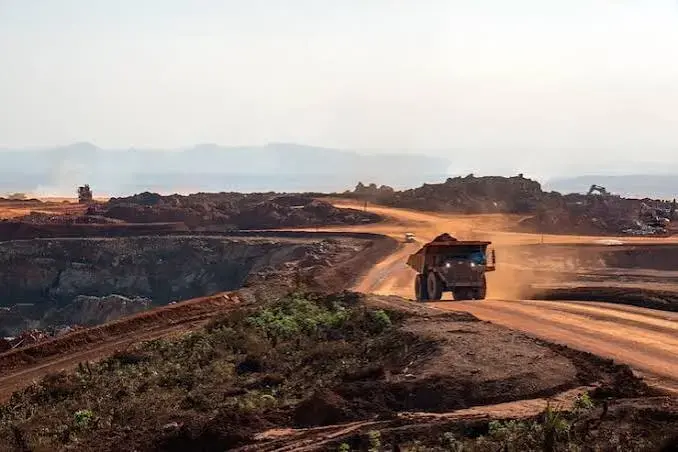


A blast breaks up the ore, a shovel digs it out, a truck hauls it away, and somewhere before it arrives at the mill. The detailed information that geologists spent months painstakingly extracting gets averaged out and lost in the process. By the time it reaches the mill, the information that could predict how best to process that particular fraction of ore is already gone. Ore tracking aims to prevent that loss by following every tonne of mined material from the face to the mill and attaching its grade, hardness and metallurgical characteristics throughout.
Where Mine-to-Mill Performance Leaks
In our experience working with gold and base metal operations, the issue rarely rests with a single factor. The mine plans in blocks, the ROM pad is managed on averages, and the mill responds to whatever shows up on the conveyor belt. Taken individually, these are all reasonable approaches to managing a complex system, but collectively, they create a mill that is always playing catch-up to the mine. Metallurgical testwork rarely extends to more than 5% of an orebody, meaning that the other 95% is assigned to a metallurgical class based on intuition. That information is then averaged out again at the ROM pad, where it loses the detail mill operators need to set grind targets, reagent additions and throughput rates.
How Real-Time Ore Tracking Works
Modern real-time ore tracking works by connecting the dots between what was mined, where it was put, and what it turned into at the mill, without requiring any new hardware or sensors. Block models provide an estimate of what was in the ground, fleet data indicates what was taken out by each truck, stockpile surveys show the current distribution of material, and assays provide a definitive analysis of what was mined. NTWIST's MineMax suite combines this information to show what is happening with material at each stage of the journey, with confidence estimates for each value.
Within the suite, OreMax tracks material through long-term stockpiles at block level instead of as an average, while DynaMax does the same for the ROM pad and produces mill feed forecasts 1 to 7 days ahead.
Making Ore Reconciliation Faster and More Honest

At month-end, when it’s time to tally the ore sent for processing against what went through the mill, discrepancies emerge. By the time the mill finds out about a misroute, the ore in question may well already be in the tailings, and the reconciliation process can take weeks.
Continuous mine-to-mill tracking brings the discovery of misplaced ore much closer to the source, enabling mill operators to adjust their processing parameters instead of being blindsided once a quarter. By reconciling against a shared model, discrepancies can be identified at each stage instead of waiting until the end of a month or year. NTWIST's MineMax implementations have reduced misplaced material by up to 98%, depending on the operation, while faster identification of misroutes and dilution has helped some gold producers recover up to US$250 per ounce that would otherwise have been lost.
Results at the Mill
Better tracking means better mill performance. In NTWIST's experience, recovery rates at the mill can improve by between 0.5% and 5% when ROM pad averages are replaced with block forecasts. At a 100,000-ounce-per-year gold operation, a 1.6% recovery gain with no changes to downstream equipment represented an additional US$2 million a year. Reagent costs can also be reduced by up to 30% when operators have a more precise understanding of feed characteristics. In stockpile modeling, average grade variability at the block level is typically reduced by between 30% and 50%, while one gold mining operation found about 0.1 million tonnes of recoverable medium-to-high grade ore using its long-term stockpile model, representing a value of about US$11 million.
Getting Started With Material Tracking in Mining
Most operations already have the information necessary to start tracking material through the mine, whether it is blocking models, fleet management data, stockpile surveys, or assays. The initial engagement typically takes the form of a brief 45-minute discovery call followed by a review of the data the site has available. Payback is typically measured in no more than 45 days from first production use, with most operations becoming fully aware of their material flows within 90 days.
For operations where the mill is frequently surprised by the characteristics of the ore being fed to it, NTWIST's MineMax suite offers a chance to harmonize what the geologists, planners and mill operators know about the ore being extracted. To discuss how it might be deployed at a particular operation, Book a Clarity Call with the NTWIST team.
Frequently Asked Questions
What is ore tracking in mining?
Ore tracking follows material from extraction through processing, attaching its characteristics and ensuring that the mill knows as much about it as the geologists who mapped it.
Does real-time ore tracking need new hardware?
Not necessarily; platforms like NTWIST's MineMax use existing block models, fleet management data, stockpile surveys and assays to build material forecasts.
How does ore tracking improve ore reconciliation?
By continuously tracking material and reconciling it to a shared model, sites reduce the time between discovering misplaced material and taking corrective action.
About the Author
Pramodh Chandrashekar is an industry and technology expert and Senior Researcher at NTWIST. His expertise includes industrial AI, mining and manufacturing technology, digital transformation, and operational optimization.
He focuses on applying AI and data-driven technologies to improve operational efficiency and business performance.
LinkedIn: Pramodh Chandrashekar