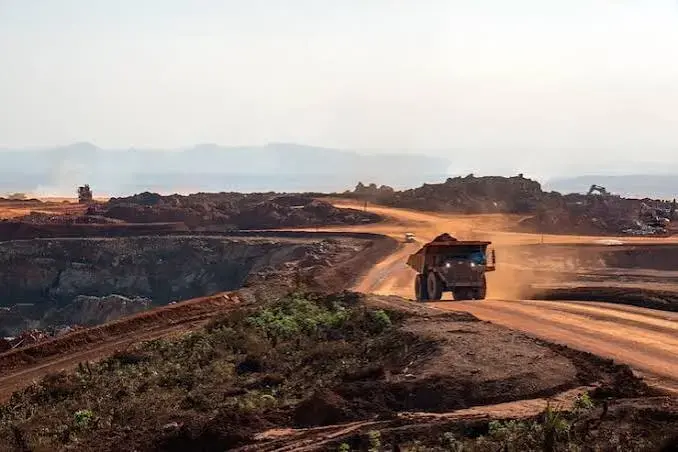


Mining companies face constant pressure to raise throughput, improve recovery, and cut emissions without adding new equipment. That pressure is driving digital transformation in mining, a shift from manual, intuition-led decisions to real-time, data-driven operations across the pit, the mill, and everything in between. The operations making this shift are not necessarily spending more. They are spending smarter, on software that turns existing sensors and process data into decisions people can act on the same shift.
What Digital Transformation in Mining Actually Means
This is not just about installing more sensors. Mining industry 4.0 connects geology, fleet, and processing data into one decision layer, so planners and operators work from the same real-time picture instead of static block models and delayed assays. A true mining digital transformation strategy treats data as an operational asset, not an IT project.
The Technologies Behind Modern Digital Mining
Several digital technologies in mining are converging to make this possible:
- Real-time stockpile and blend modeling using multi-source geological data
- Soft sensors and machine learning that improve grind size and flotation recovery
- Predictive analytics that flag process disruption before it affects output
- Mining automation that adapts plans in minutes as site conditions change
- Legacy systems, including block models and historians, not built to share data
- Teams that trust experience over dashboards after past projects added reporting without changing decisions
- Data quality gaps between geology, fleet, and plant systems
- Change management, since new workflows only stick when they replace old ones rather than sitting alongside them
NTWIST's MineMax platform brings several of these capabilities together, layering onto the block models, historians, and control systems already running on site.
Benefits: What the Numbers Show
 Producers deploying real-time optimization across pit and plant have recovered more than $30 million in annualized value, with forecast accuracy as high as 95% and payback often within 45 days. Plant-level results include a 20% increase in grind target compliance, recovery gains of up to 12%, and up to $250,000 a year saved at a single concentrator. One AI model increased potential profit in 42% of operating hours and corrected off-target conditions in another 17%, a level of consistency that is difficult to reach through manual adjustment alone.
Only about 5% of a typical ore body is metallurgically studied in detail, and more than 80% of production decisions are still made on intuition. The exact gap in digital transformation in mining is built to close.
A Real Deployment
A leading gold producer transitioning from open-pit mining to full stockpile reliance needed confidence that its estimates were sounding before making that shift. Using NTWIST's MineMax platform to validate stockpile composition through GPS-based modeling, the operation confirmed its stockpile estimates independently, giving planners a clearer basis for feed decisions and keeping mill performance stable through a transition many operations treat as a high-risk moment for production consistency.
Common Challenges
Digital mining solutions run into a consistent set of obstacles:
The strongest digital transformation in mining programs is built to work with the systems already on site, rather than forcing a rip-and-replace approach that stalls momentum before it starts.
A Practical Roadmap
A mining digital transformation strategy that holds up tends to follow three stages:
- Quantify the opportunity and size of the expected impact upfront.
- Configure and connect the software to existing workflows and systems.
- Enable and monitor new plans, tracking outcomes to sustain gains.
Most operations following this roadmap, including sites running NTWIST's MineMax platform, reach operational clarity within 90 days.
Frequently Asked Questions About digital transformation in mining
Q1. What is digital transformation in mining?
It is the shift from manual, experience-based decisions to real-time, data-driven operations that connect geology, fleet, and plant data into one decision layer.
Q2. How long does a digital mining deployment typically take?
Most reach operational clarity within 90 days, with payback on first production use often achieved in under 45 days.
Q3. Does digital transformation require replacing existing mining systems?
No. Most digital mining solutions, including NTWIST's MineMax platform, integrate with block modeling, historians, and control systems already on site rather than replacing them.
Q4. What results can mining operations expect?
Reported outcomes include a 20% increase in grind target compliance, recovery gains of up to 12%, and more than $30 million in annualized value across deployments, with forecast accuracy reaching as high as 95% along the way.
Q5. Why do so many operations still rely on intuition instead of data?
Only about 5% of a typical ore body is metallurgically studied in detail, leaving gaps that real-time data and mining automation are only now closing, often faster than teams expect once the data is connected.
About the Author
Pramodh Chandrashekar is an industry and technology expert and Senior Researcher at NTWIST. His expertise includes industrial AI, mining and manufacturing technology, digital transformation, and operational optimization.
He focuses on applying AI and data-driven technologies to improve operational efficiency and business performance.
LinkedIn: Pramodh Chandrashekar