
%20(17).jpg?width=1200&height=630&name=Featured%20Images%20(1200%20x%20630%20px)%20(17).jpg)
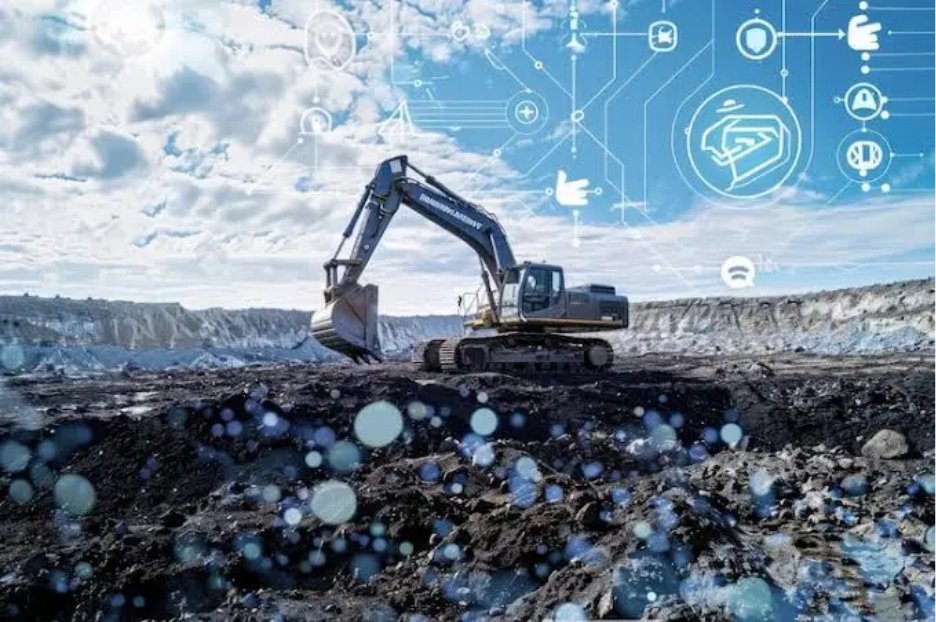

Energy expenses constitute up to 30% of total operating costs in mining - making them the most controllable expense for operators. Most mining operations, however, still employ a reactive and fragmented approach to mining energy management. Artificial Intelligence (AI) is changing this by transforming operational data into automated decisions to reduce energy consumption, lower emissions, and future-proof compliance to regulations.
The Challenges of Energy Management in Mining
Prior to AI assuming this role, it is important to appreciate what most traditional mining energy management systems face in terms of challenges.
Reactive management of energy is what most mining operations practice. They wait to address a problem after it manifests and not before, creating three interrelated inefficiencies for the operations.
Uncoordinated energy draws result from energy systems, like ventilation fans, dewatering pumps, haul trucks, and crushers, operating simultaneously. Without a centralized scheduling and visibility mechanism, demand charges will spike.
Operations that lack predictive control cannot take advantage of low-cost or low-carbon periods to perform high-energy tasks. Without effective forecasting, strategic planning is an uncalibrated energy decision.
Idle-state waste is widespread across systems. Mill systems operate without full feed. Ventilation systems operate at maximum capacity in low-activity zones. Haul trucks cycle without full loads. Taken individually, these instances appear small; however, in the aggregate, they represent a significant loss, often in the millions.
Many of the challenges energy management practices in mining face are the result of operating multiple complex systems without real-time intelligence. AI is engineered to address this gap.
How AI Optimizes Energy in Mining: Core Applications
 1. Predictive Maintenance for Energy-Efficient Equipment
Predictive maintenance uses AI to avoid equipment failure caused by inefficiency. Maintenance teams can foresee equipment failure caused by insufficient maintenance or excessive wear. Motors that operate 8% above baseline power due to bearing wear can be repaired before failure or before repair becomes prohibitively expensive.
Overall: unplanned downtime is reduced.
2. Ventilation on Demand (VoD)
Ventilation consumes 25–40% of a mine’s energy. Most ventilation systems do not consider occupancy, and are therefore not energy efficient.
Using reinforcement learning, VoD makes real-time measurements of occupancy, activity, production schedules, and gas sensor readings to dynamically alter the ventilation system. Studies have shown savings of 20–30% of energy consumed by ventilation (Sahoo et al., 2023).
3. Processing Plant Efficiency: Grinding and Crushing
Grinding consumes more energy than any other activity in processing minerals. AI helps provide more throughput per unit of energy consumed by optimizing mill fill levels, water addition, and liner wear compensation.
In real-time processing optimization, energy savings in comminution circuits are between 5 and 15%, without incurring any costs for new hardware (Yang & Lee, 2023).
4. Automated Load Balancing and Demand Response
AI systems can schedule when processes that consume significant amounts of energy — dewatering, crushing, ore blending — should occur, considering grid carbon intensity, time-of-use tariffs, and contractual demand caps. Integrating this flexibility with on-site renewables or battery storage transforms the mine from being a passive consumer to an active participant in the grid.
This reduces peak demand charges, and positions operations to benefit from demand response incentives that utilities offer.
5. Optimization of Drilling and Blasting
AI can optimize the design of drills, blasts, and fragmentation so that the crushing and hauling processes downstream use the least amount of energy. Adequately fragmented ore reduces the energy required by the mill to grind it. Further, optimizing the haul paths reduces the amount of fuel consumed. This approach can reduce the energy requirements for drilling and blasting by up to 15%, improving downstream processing efficiency (Zhao et al., 2023).
What AI Energy Optimization Delivers: Measurement of Results
 The literature and operational case studies are consistent:AI-driven energy optimization in miningreduces energy consumption on a total scale of 10–20%. This can be broken down by benefit category:
Benefit Area
Typical Impact
Ventilation energy reduction
20–30%
Comminution energy savings
5–15%
Peak demand charge avoidance
8–12%
Overall energy intensity (kWh/t)
10–20% reduction
Scope 2 emission reduction
Proportional to grid carbon intensity
The energy savings are further compounded by strategic benefits, with the improved cost reduction being immediate and measurable due to lower energy bills, peak demand charges, and grid penalties.
Reduction of Scope 2 emissions supports ESG commitment. Through high-energy process alignment with low-carbon grid windows, AI makes operational carbon intensity improvements without the need for fleet electrification or renewables.
Regulatory preparedness can be automated. AI systems that register energy use decisions can produce the necessary audit trail for GHG Protocol reporting, CDP disclosures, and forthcoming carbon border adjustments.
Implementation Challenges — And Solutions
AI energy optimizationis not plug-and-play. Three challenges consistently appear.
Data quality and availability challenges affect remote mining operations, when, for example, there are sensor gaps in the data, or systems that lack the ability to export clean telemetry. The answer is a phased investment in data infrastructure prior to model deployment — not the other way around.
Real-time optimization demands computational infrastructure that can handle the workload. With respect to latency, edge computing is the new standard — processing at the data source instead of routing data to the cloud.
Legacy systems will invariably rely on interfacing middleware to connect modern AI outputs to systems and controls based on SCADA and PLC technology. During project scoping, this must be properly defined.
Operations that make the necessary investments at the outset tend to experience the fastest return on investment and have the least number of project failures.
NTWIST’s Approach to AI Energy Optimization
 At NTWIST, energy optimization is centered around the implementation of AI systems designed to minimize energy use without affecting throughput. Integration occurs at the crusher, mill, and within load management systems, making the savings highly visible and governed by the data output to ESG and GHG reporting.
We operate at all levels of digital maturity, from the setup of initial data systems to the full deployment of closed-loop control systems.
The Strategic Outlook
Energy optimization as a strategy for operational value is shifting in scenarios involving high regulatory pressure for Scope 1 and 2 emissions, high volatility in energy prices, and increased scrutiny of sustainability performance from investors and off-take partners.
AI will not only improve sustainability reporting and performance by reducing energy costs — it will transform operational energy from being a cost center to a managed, reportable, continuously improving asset. Mines adopting these systems will be structurally lower cost to operate, as well as being at a compliance advantage to those that do not.
People Also Ask
Q1: How does AI reduce energy consumption in mining?
AI reduces energy consumption in mining by using machine learning to forecast demand, automate load scheduling, optimize ventilation on demand, and adjust process equipment in real-time — which usually results in 10–20% energy savings across the board.
Q2: What is Ventilation on Demand (VoD) in mining?
Ventilation on Demand is an AI system that controls ventilation in a mine using real-time data about activities, personnel, and gas concentrations to replace a constant ventilation schedule and reduce ventilation energy by as much as 30%.
Q3: Can AI help mining companies reduce carbon emissions?
Yes. Optimizing energy with AI allows mining companies to reduce their Scope 2 emissions by shifting energy-intensive activities to lower-carbon grid periods, improving system performance, and better coupling with intermittent renewable energy sources — without disrupting ongoing work.
Q4: What are the biggest challenges regarding AI implementation for energy optimization in mining?
The main three are the challenges related to remote environment data quality, the computational infrastructure necessary for real-time processing, and integrating AI outputs with legacy SCADA and PLC control systems.
Q5: What is the estimated savings AI can provide for mining energy costs?
Energy optimization AI can reduce energy costs in mining by 10–20% on large-scale operations. Additional savings come from reduced peak demand charges, predictive maintenance, and avoided grid penalties.
About the Author
Pramodh Chandrashekar is an industry and technology expert and Senior Researcher at NTWIST. His expertise includes industrial AI, mining and manufacturing technology, digital transformation, and operational optimization.
He focuses on applying AI and data-driven technologies to improve operational efficiency and business performance.
LinkedIn: Pramodh Chandrashekar
References
Zhao, B., Zhou, J., & Wang, H. (2023). Advancing AI-Enabled Techniques in Energy System Modeling. Energies, 18(4), 845. Retrieved from https://www.mdpi.com/1996-1073/18/4/845
Sahoo, S., Lin, Y., & Kumar, A. (2023). Advanced Deep Learning Algorithms for Energy Optimization in Industrial Systems. Energies, 18(2), 407. Retrieved from https://www.mdpi.com/1996-1073/18/2/407
Yang, D., & Lee, H. (2023). Artificial Intelligence and Machine Learning for Energy Efficiency. Energy Reports, 9, 1475–1490. Retrieved from https://www.sciencedirect.com/science/article/pii/S2211467X22002115